9 Min Read
Most homeowners in Greater Lansing don't realize there are two completely different ways to hire for a remodel. You can work with a design-build firm that handles your project from the first sketch to the final walkthrough, or you can hire a designer, get plans drawn, and then bring in a general contractor to bid and build them.
The path you pick shapes everything. It changes how your budget gets set, how long the project takes, who's accountable when something goes sideways, and how much of the coordinating lands on you. It's also the reason it's so hard to compare two contractors "apples to apples." They're often not even selling you the same thing.

In this blog you'll learn what design-build and general contractor really mean, the three key differences between them, the pros and cons of each, what design-build costs in Greater Lansing, the disadvantages, and how to decide which approach fits your project.
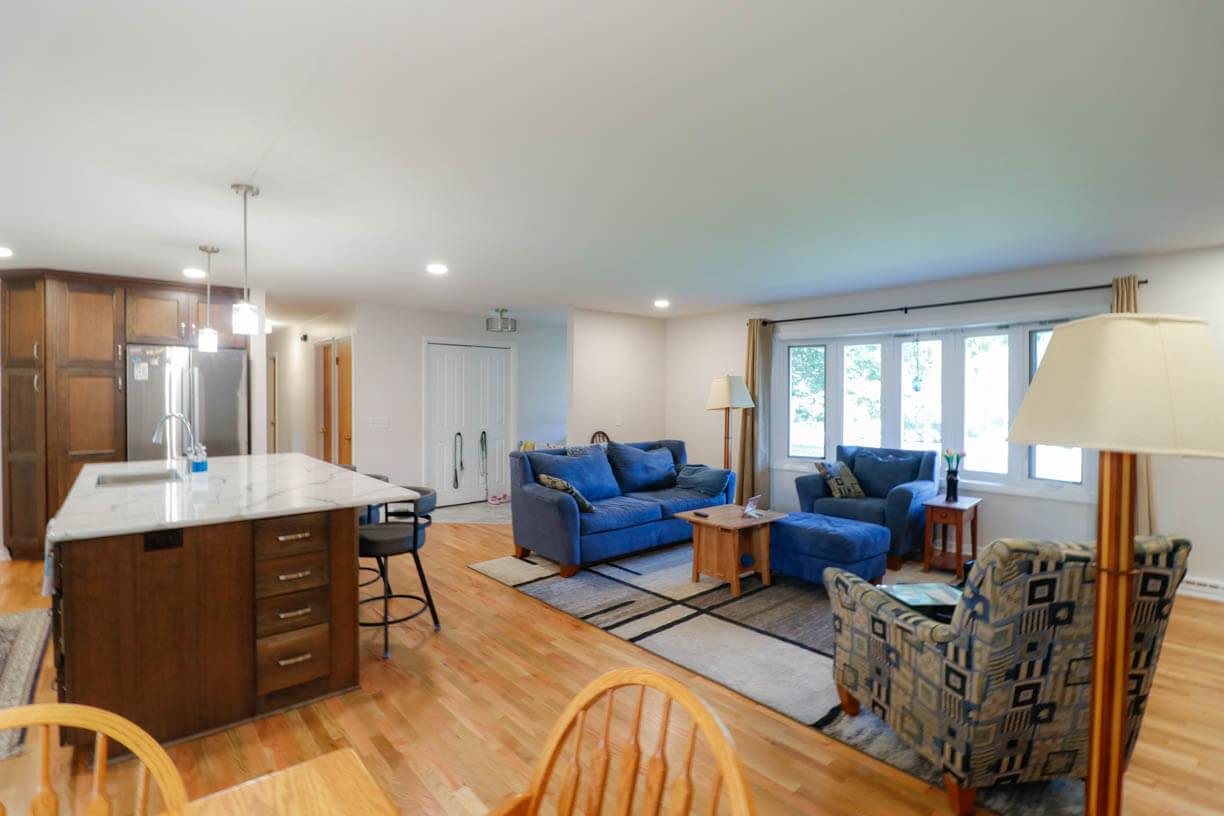
Our Cornell Okemos design-build remodel, where design and construction were handled by one team. You'll see more of this project below.
Table of Contents
- Design-Build vs. General Contractor at a Glance
- What Is a Design-Build Firm?
- What Is a General Contractor?
- The 3 Key Differences
- Pros and Cons of Each Approach
- Is Design-Build More Expensive?
- What's the Disadvantage of Design-Build?
- What to Ask Before You Hire
- Which Approach Is Right for Your Lansing Home?
- How Odd Fellows Contracting Guides the Process
- Frequently Asked Questions
Design-Build vs. General Contractor at a Glance
Design-build means one company handles both the design and the construction under a single contract. A general contractor handles the building only, which means you hire a designer or architect first, then hand those finished plans to the contractor to bid on and build. That second path is often called "design-bid-build," and it's the traditional way remodels have been done for decades.
| Design-Build | General Contractor (Design-Bid-Build) | |
|---|---|---|
| Who you hire | One firm for design and construction | A designer, then a separate contractor |
| Contracts | One | Two or more |
| Pricing | Fixed price set during planning | Bids come in after design is done |
| Timeline | Design and build overlap | Design, then bid, then build (sequential) |
| Who coordinates | The firm | You |
| Accountability | One team owns the outcome | Split between designer and builder |
| Best for | Whole-home, complex, or hands-off projects | Small jobs, or when you already have plans |
The rest of this guide unpacks each row so you can see which one matches how you want to remodel.
What Is a Design-Build Firm?
A design-build firm is one company that designs your project and builds it, under one roof and one contract. You have a single point of contact from the first conversation through the final walkthrough.
At Odd Fellows Contracting, that's the whole model. We follow a 6-step design-build process that front-loads the planning, so the design and the budget are settled before any demolition starts. As our team puts it, the goal is to "plan thoroughly, build confidently, and avoid costly surprises." Because the design work and the cost work happen together, we can hand you a fixed-price contract based on real selections, not a rough guess that changes later.
That's the core idea behind design-build. The people drawing your kitchen are talking to the people building it the entire time, so nothing gets designed that the build team can't price or execute.
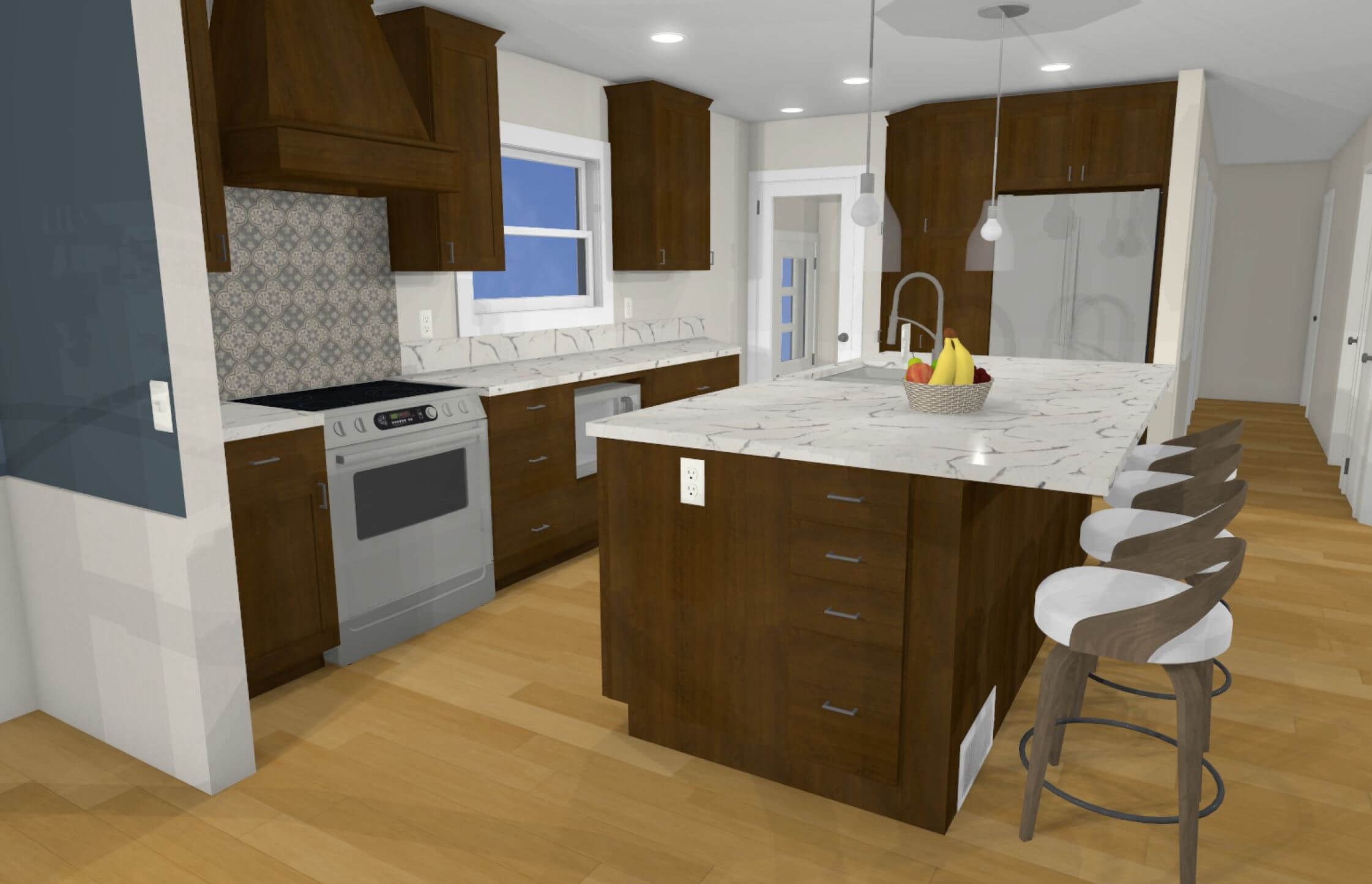
A 3D design rendering of the Cornell Okemos kitchen. In design-build, the same team that draws the plan builds it.
What Is a General Contractor?
A general contractor builds the project. In the traditional design-bid-build route, you start by hiring a designer or architect to create your plans. Once those plans are finished, you take them out to one or more general contractors, collect bids, pick one, and they construct what's on the drawings.
This route has been around forever, and it works. The catch is that you sit in the middle. The designer drew the plans, but the contractor has to build them, and those are two separate companies with two separate contracts. If the builder hits something in the design that doesn't work in the real world, you're the one relaying messages between the two. When there's a disagreement about who's responsible for a problem, it can turn into finger-pointing, and you're standing between them.
The 3 Key Differences Between Design-Build and Design-Bid-Build
If you only remember three things, remember these.
1. Team structure. Design-build keeps the designer and the builder on the same in-house team. The general contractor route splits them into separate companies you hire one at a time.
2. Process flow. Design-build overlaps design and construction, so pricing and feasibility are worked out as the design develops. Design-bid-build runs in sequence: you finish the design, then bid it, then build it. Each phase waits on the one before it.
3. Your role. With design-build, you're the decision-maker and the firm carries the coordination. With a general contractor, you're effectively the project manager connecting the designer and the builder.
Those three differences drive almost every pro and con below.
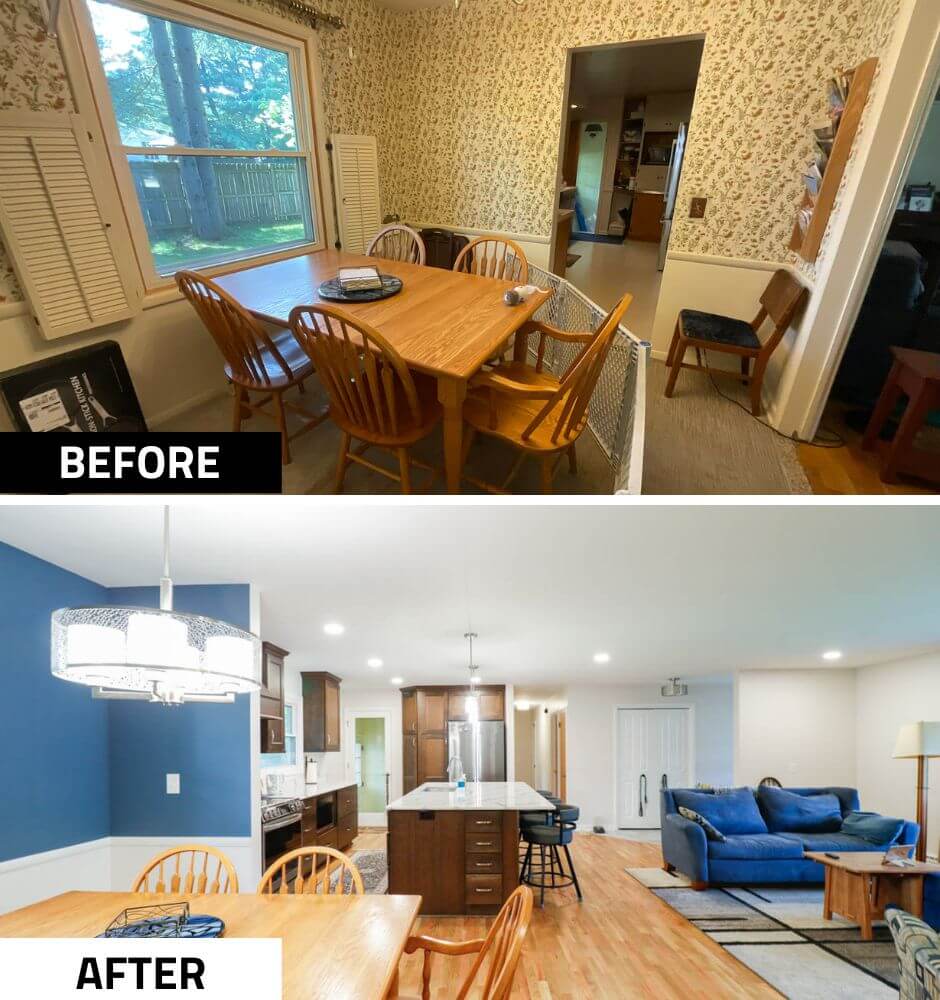
Opening up the Cornell Okemos floor plan took design and construction working together from the start.
Pros and Cons of Each Approach
Neither model is automatically better. They're built for different situations.
Design-Build
Pros:
- One point of contact for the entire project
- A fixed price set during planning, so the budget is clear before the build starts
- Faster overall, because design and construction overlap instead of waiting in line
- One team is accountable for the result, with no one to point at but themselves
- Less stress, since the firm handles the coordinating
Cons:
- You don't competitively bid the construction phase out to multiple builders
- You're choosing one firm's team rather than handpicking an outside architect
Best for: whole-home remodels, additions, complex or custom projects, and homeowners who'd rather make decisions than manage trades.
General Contractor (Design-Bid-Build)
Pros:
- Works well if you already have finished plans or an architect you trust
- Can be cheaper up front on small, simple jobs
- You keep maximum control over the design and who draws it
Cons:
- You coordinate between the designer and the builder
- Bids can swing widely once they come in, sometimes well past your budget
- If a design issue shows up during construction, it can cause delays and finger-pointing between two companies
Best for: small or straightforward projects, or a very specific custom design where you've already lined up your own architect.
Is Design-Build More Expensive?
Usually not, once you count the whole project.
Design-build moves the design and planning cost earlier, instead of giving you a "free" estimate that grows through change orders later. You're paying for real planning up front, which is what makes a fixed price possible. A low bid on a general contractor project can look cheaper on day one and end up higher by the end once the change orders stack up.
A study from the Construction Industry Institute and Penn State (read a write-up on the report here) found that design-build projects were delivered about 33.5% faster and roughly 6.1% cheaper than projects run the traditional design-bid-build way. Faster and a little cheaper, with one team owning it.
For real numbers in our market, here's what design-build projects tend to run in the Greater Lansing area (full breakdowns are in our cost guide):
- Kitchen remodels: $18,000 for a refresh up to $145,000+ for a luxury build
- Bathroom remodels: $18,000 to $85,000+ depending on scope
- Whole-home remodels: roughly $120/sq. ft. on the economy end to $225+/sq. ft. for luxury
- Home additions: $45,000 for a screened room up to $300,000+ for a primary suite
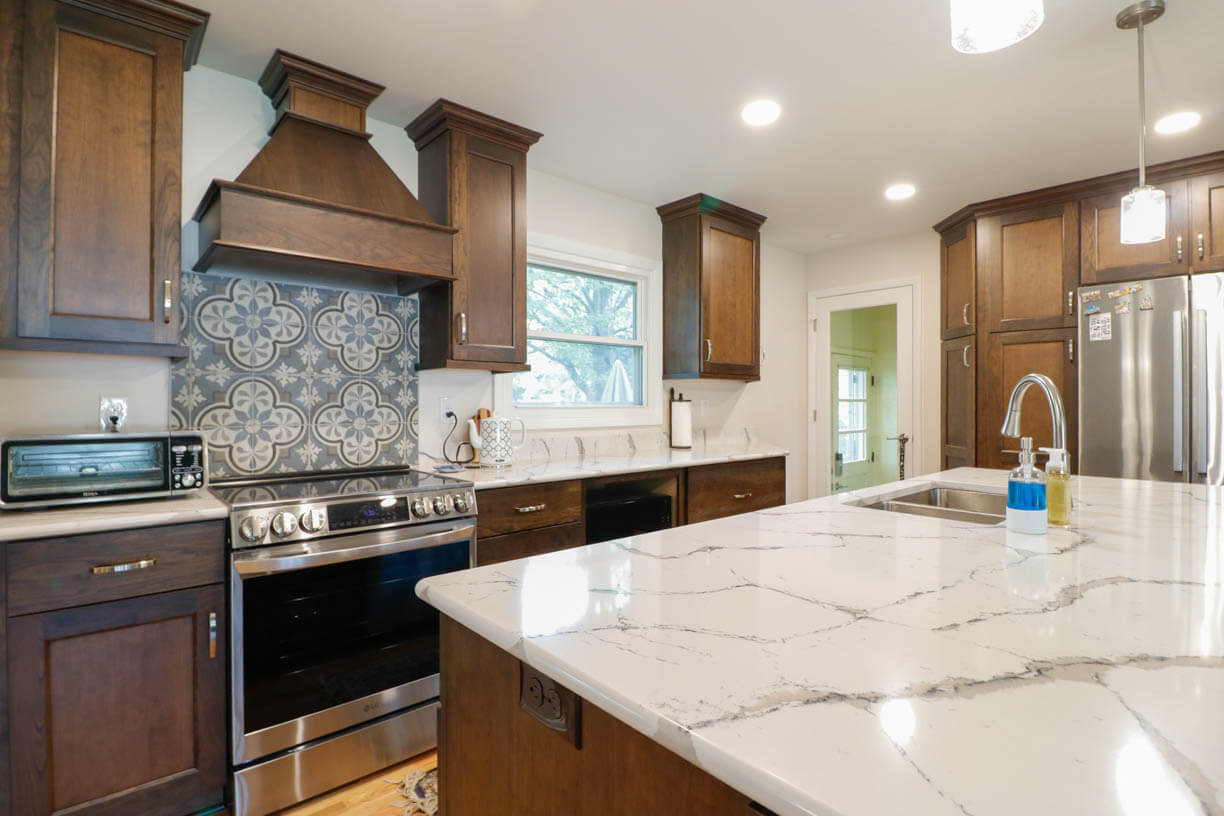
Finish choices like the quartz island in this Cornell Okemos kitchen are one of the biggest levers on final cost.
Those ranges are wide on purpose. A few things move a Greater Lansing project up or down within them. Size is the obvious one, but layout changes matter just as much. Moving plumbing, relocating a gas line, or taking out a load-bearing wall adds structural and mechanical work that a cosmetic refresh never touches. Finish level is the other big lever, since the same kitchen footprint can land at the low end with stock cabinets and laminate or near the top with custom cabinetry and quartz. Older Lansing-area homes add their own wildcards too, from knob-and-tube wiring to settling foundations to whatever's hiding behind a wall built in the 1950s.
That's the argument for the design-build model on cost. Those wildcards get found during planning, not during demolition. By the time you sign a fixed-price contract, the surprises that blow up a traditional budget have already been accounted for. You know your number before the first wall comes down, instead of finding out as you go.
What's the Disadvantage of Design-Build?
With design-build, you don't shop the construction out to three builders, so you give up the comparison-shopping some homeowners want. You commit to one firm's team and process earlier in the journey, before you've seen them frame a wall. You also invest in planning and design up front rather than getting a quick free estimate.
For some people, that's the wrong fit. If your project is small, if you already have an architect you love, or if your only goal is the lowest possible upfront number, a general contractor may serve you better.
For most full remodels, though, those tradeoffs are exactly what protects you. The fixed price comes from doing the planning instead of skipping it. The single team means no one can blame the other guy. A firm with a long track record and a real portfolio gives you a way to judge the work before you sign, which is what comparison-shopping was trying to get you anyway.
What to Ask Before You Hire
People search for "what not to tell your contractor," usually out of a fear of being taken advantage of. The better move isn't hiding information. It's asking the right questions so you can tell a thorough contractor from a sloppy one.
Ask these:
- Is this a fixed price, or an estimate that can change? If it can change, what triggers a change?
- What's included in the price, and what's specifically excluded?
- Who handles design decisions and selections, and when do they get locked in?
- How do you handle surprises once walls are open?
- Can I see finished projects like mine, and talk to those homeowners?
A contractor who plans thoroughly will have clear answers. One who waves the questions off is telling you something. The whole point of a real planning process is that the answers exist before the work starts, not after.
Which Approach Is Right for Your Lansing Home?
Three questions sort it out quickly:
1. What type of project is it? Whole-home, additions, and complex remodels lean design-build. A single small, well-defined job can go either way.
2. Do you already have plans or permits? If you've got finished architectural drawings you're happy with, a general contractor can build them. If you're starting from an idea, design-build takes you from concept to completion.
3. How hands-on do you want to be? If you want to manage the designer and the builder yourself, the general contractor route gives you that control. If you'd rather make decisions and let one team handle the rest, design-build is built for that.
Choose design-build if you want one accountable team, a firm budget, a faster start, and help shaping the design. A general contractor may fit if you already have a designer you trust, the job is small and straightforward, or the lowest upfront cost is your only priority.
How Odd Fellows Contracting Guides the Design-Build Process
Odd Fellows Contracting has been designing and building remodels across Greater Lansing since 1988, which is 38 years of running projects the design-build way. Our designers and estimators are in-house, so the people planning your project are the same team standing behind the price.
Take the Cornell Okemos home remodel. By removing the wall between the kitchen and family room, our designer had a lot of options on how to configure the kitchen. That one move is the heart of why design-build works. The person redrawing the layout was the same team that had to build it, so the plan accounted for the structure, the flow, and the finishes all at once instead of in separate handoffs.
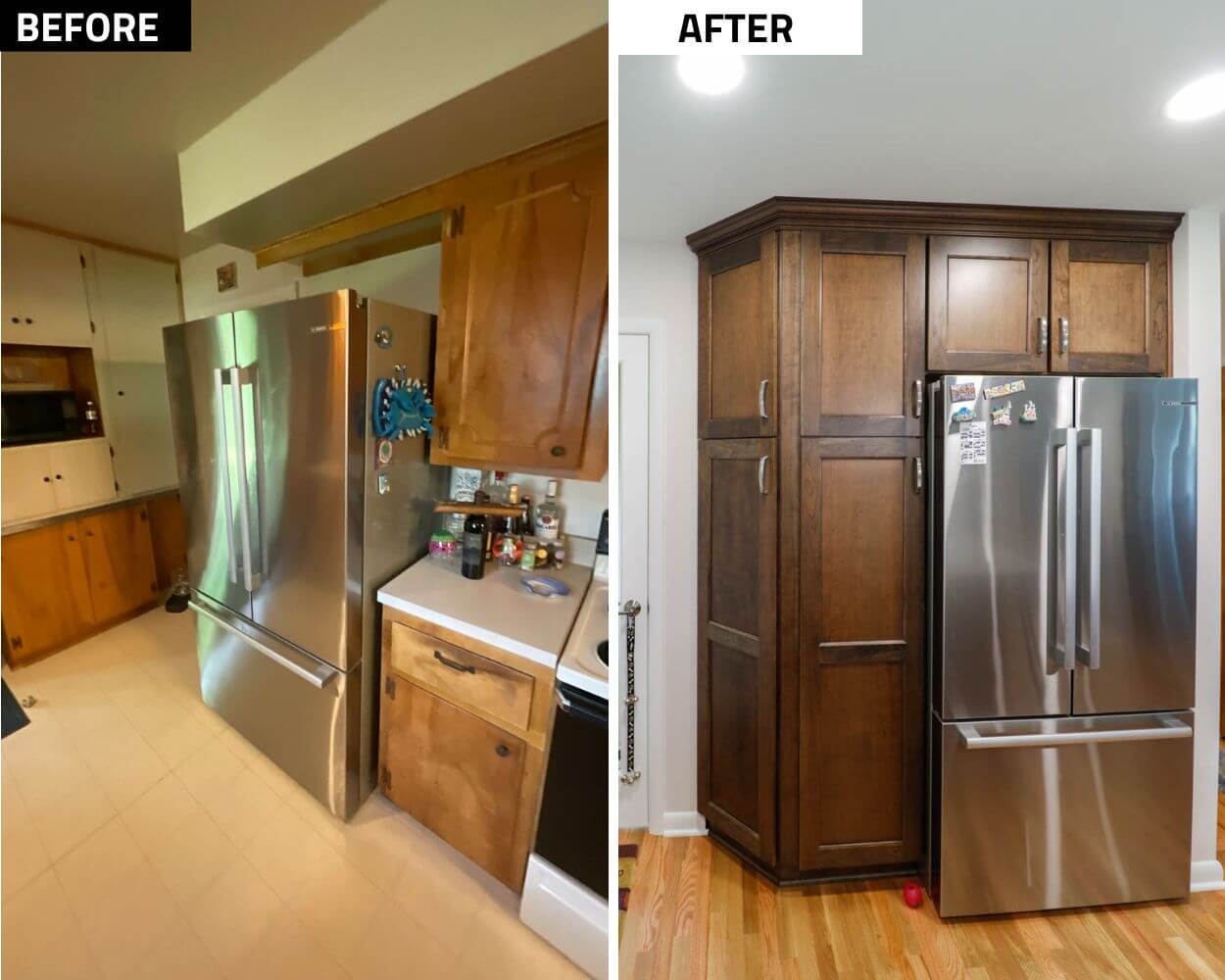
Before and after the wall came down in the Cornell Okemos kitchen.
From there the project rippled across the main floor. We worked to preserve the original hardwood floors in the family room and extended them into the new kitchen and dining space, so the rooms read as one. The work included updates to the family room area and the front door entry. A closet at the garage entry was converted into a laundry space, bringing the laundry up from the basement to the main floor. An existing bonus room was updated into a full master suite bedroom, and the half bathroom was completely reconfigured into a full bathroom, which meant relocating fixtures and adding a full shower. Rooms changing purpose, plumbing moving, and finishes flowing through the whole main floor is exactly the kind of project where one coordinated team earns its keep. You can see more in our portfolio.
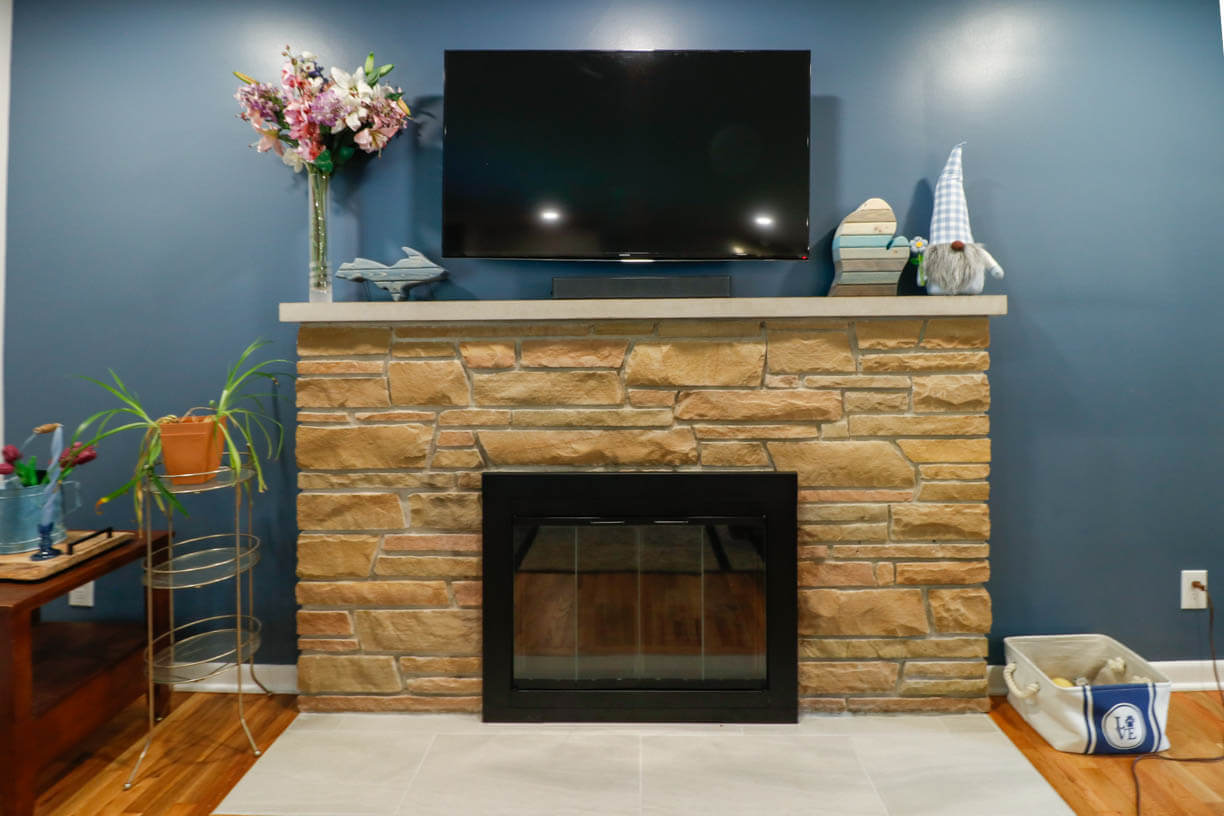
The Cornell Okemos family room, with the original hardwood preserved and extended into the new kitchen and dining space.
Everything runs on our 6-step design-build process, which puts most of the work into planning before construction begins. That's what lets us give you clear expectations, a fixed-price contract, and a plan you can actually trust.
The model you choose matters more than the logo on the truck. It decides how your budget holds, how your timeline runs, and who answers when you have a question. If you want one team accountable for your remodel from design through the final walkthrough, that's the work we've been doing in Greater Lansing for nearly four decades.
Ready to talk through your project? Start My Project and we'll walk you through what design-build would look like for your home.
Frequently Asked Questions
Design-build vs. general contractor: which is right for my Lansing, MI home?
Design-build fits whole-home, complex, or custom remodels and homeowners who want one accountable team and a fixed price. A general contractor fits small, straightforward jobs or projects where you already have finished plans and an architect you trust.
What is the difference between a contractor and a design-build firm?
A general contractor builds from plans someone else created, so you hire a designer separately. A design-build firm handles both the design and the construction under one contract and one point of contact.
Is design-build more expensive than hiring a general contractor?
Usually not, when you count the full project. Design-build sets a fixed price during planning, while a low contractor bid can grow through change orders. Research from the Construction Industry Institute and Penn State found design-build runs about 33.5% faster and 6.1% cheaper than design-bid-build.
What's the disadvantage of design-build?
You don't competitively bid the construction out to multiple builders, and you commit to one firm's team earlier in the process. For a tiny project or when you already have an architect, a general contractor may fit better.
How long does the design-build process take in Lansing, MI?
It depends on scope, but design-build is generally faster than the traditional route because design and construction overlap instead of running in sequence. Most of the time goes into planning up front, which keeps the build phase on schedule.